Back to: Leadership
From Developer to VP: What Dina Mordukhovich Taught Me About the Leadership Gap
What the climb from developer to VP reveals about the leadership gap, and why the skills that get you promoted are not the ones that got you hired.
I once thought career growth is a straight line. Do good work. Get noticed. Get promoted.
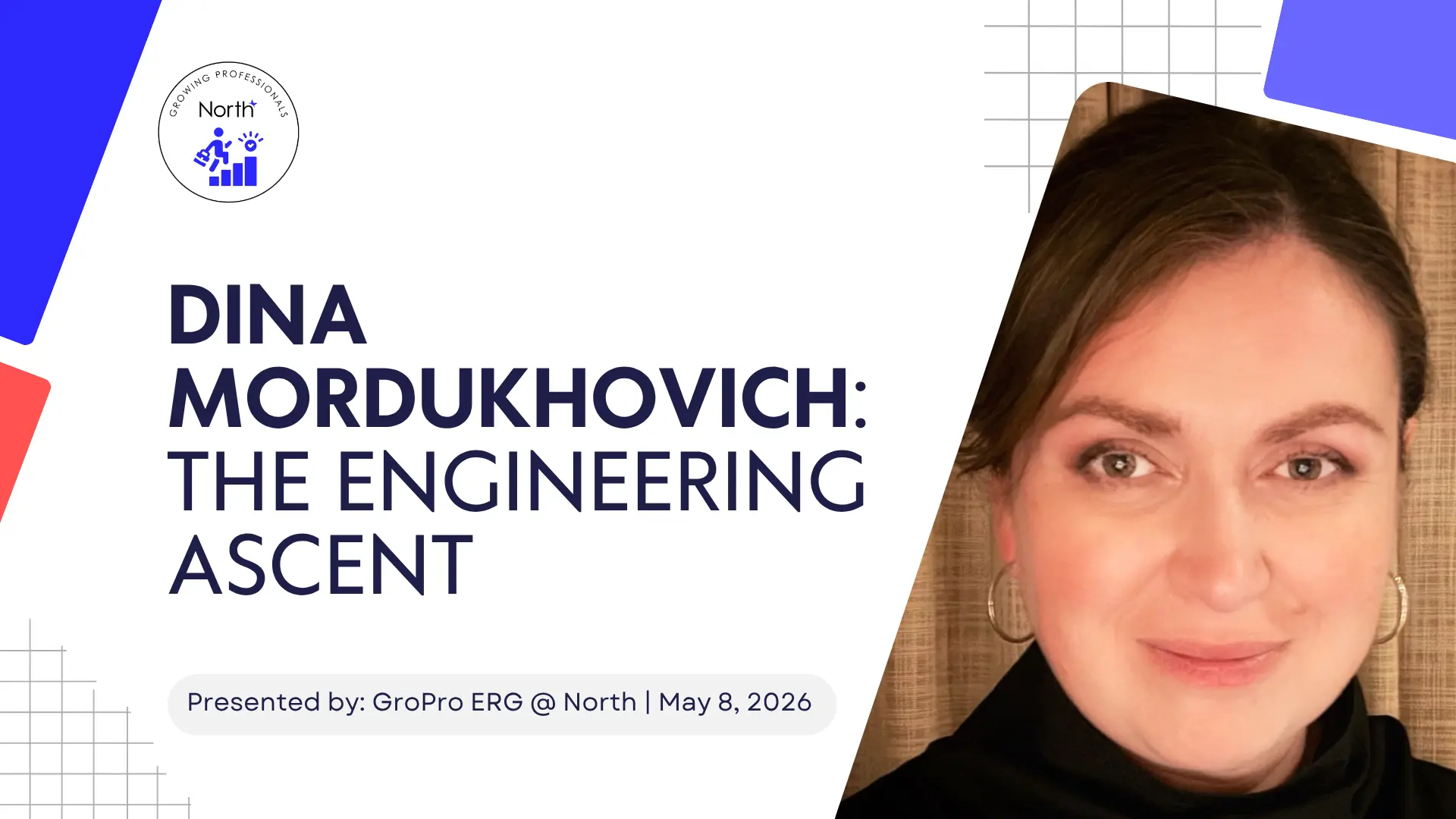
It’s not that simple. And last Friday, at our GrowPro ERG “The Engineering Ascent” event, Dina Mordukhovich, VP of Engineering at North, explained why.
I co-hosted this session with Alora D Boerner, and I walked away with more useful leadership thinking than most books I’ve read this year.
Here’s what stuck.
Stop Being Good at Your Job
That sounds wrong. But Dina’s point was clear: technical excellence gets you in the room. It doesn’t get you to the next level.
What does? Understanding the business. The payment industry. The strategy behind the product. The “why” behind every project you touch.
Most developers wait to be handed that context. The ones who grow stop waiting. They ask questions that go beyond their scope, and they start caring about outcomes the same way an owner would.
The job is just the starting point. What you learn around the job is what determines how far you go.
This shift, from waiting for direction to taking ownership of outcomes, is the foundation of every leap Dina described. In fact, building an ownership mindset is what separates people who get noticed from people who get stuck at the same level for years.
Titles Are a Byproduct
One of the most counterintuitive things Dina said: stop chasing the title.
When you focus on doing things right, on being the person who can be trusted, who follows through, who treats people well, the recognition follows. It always does.
The problem is that most people approach career advancement backwards. They optimize for visibility before they’ve built the foundation that makes visibility worth anything.
Trust compounds. Build that first.
The Real Test of a Leader Is What Happens When Things Go Wrong
Dina was direct about this: having your team’s back isn’t optional. It’s the job.
And delegation isn’t a management trick. It’s a signal. When you trust your team enough to hand off real responsibility, two things happen: they grow, and you free yourself to operate at a higher level.
Leaders who can’t let go stay stuck at the level they’re at. The ones who can, and who take the hit when something breaks — are the ones people actually want to follow.
Get a Mentor Who Has Nothing to Gain From Your Success
Formal mentorship. Outside your reporting line. Dina was emphatic about this.
Your manager has a stake in your performance. A mentor outside that chain doesn’t. That difference matters more than people realize. They’ll tell you things your manager won’t. They’ll see your blind spots more clearly. And they’ll open doors through honest recommendation rather than obligation.
Most people skip this step. They shouldn’t.
What It Looks Like When You Build Something That Lasts
The moment in the session that landed hardest was when Dina talked about the Enrollment tool — a product she helped build alongside colleagues like Carly Hacker.
That internal tool has grown to the point where competitors are actively trying to replicate it. Think about that. Something built inside a company is now setting the standard for the industry.
That doesn’t happen by accident. It happens when talented people are given ownership, trust, and room to execute.
It’s also a good reminder that the work you do right now, whatever the project, whatever the scope, has a longer reach than you think.
Actionable steps if any of this resonated:
- Map one thing you don’t fully understand about your business. Not your team — the business. Ask the question this week.
- Identify one task you’re holding that you should hand off. Delegation isn’t weakness. Hoarding work is.
- Name a mentor outside your chain of command. If you don’t have one, that’s the starting point.
- The next time something goes wrong on your team, ask yourself before anything else: what could I have done differently?
Leadership isn’t a title someone gives you. It’s a set of habits you build long before anyone notices.